Teaching
I have taught courses, guest lectured, and led workshops in modern Jewish history; race, gender, and sexuality in US history; the global history of food; and oral history, among other subjects, at Stanford University, the University of Toronto, and the Moscow School of Higher Economics. See below for two sample courses.
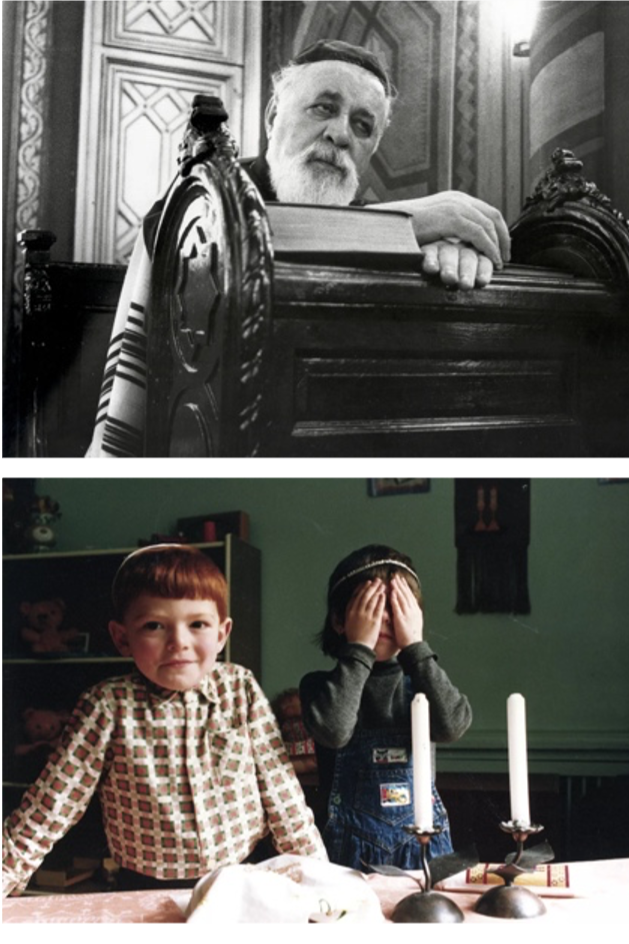
Vanishing Diaspora? Ruin, Revival, and Jewish Life in Post-Holocaust Europe (Stanford University)
First in the grim aftermath of World War II and then again in the uncertain social, cultural, and political environment following the collapse of communism in the late 1980s and early 1990s, there was a great deal of consternation within global Jewry over the potential for a Jewish future across a shattered European landscape. Indeed, for much of the second half of the twentieth century, it seemed to many observers that Jewish life in Europe, already severely reduced after the Holocaust, would one-day vanish entirely—an inevitability spurred by communal fracture, demographic decline, and the forces of migration and assimilation. That assessment was, and remains, premature.
This course explores the lives and fates of European Jews as they re-encountered, reimagined, and reconstructed their communities after 1945. Attending to a variety of national and ideological contexts, with a particular focus on Eastern Europe and communist bloc, the course traces how Jews wrestled with their past, present, and future in the wake of continent-wide calamity and amid a host of late-twentieth and early-twentieth century developments, including the founding of the state of Israel, expanding Soviet influence, Cold War geopolitics, democratic revolution, the rise of global Jewish philanthropy, and the post-Soviet order of the 1990s and 2000s. As we journey around Europe, from Czechoslovakia to Hungary, from East Germany to Romania, from Soviet Russia to post-Soviet Ukraine, we will follow postwar Jewry’s encounter with all of those historical currents, uncovering how Jewish leaders and “ordinary” Jewish citizens grappled with the anxieties of return and emigration, the dilemmas of assimilation and acculturation, and the interplay between cultural destruction, revival, and nostalgia in the face of lingering antisemitism, explosive Holocaust memory politics, and the new centers of Jewish power and influence in the United States and Israel.
This interdisciplinary course draws on new, cutting-edge scholarship on the postwar history of European Jewries, as well as a wide and electric array of primary sources that raise slippery questions around the material and metaphysical ramifications of communal “ruin,” the meaning of “renaissance” and “revival” (and whether they are even adequate frameworks for discussion), Jewish memory and culture in the absence of Jews, and processes of ethnic, religious, and national identity formation over time.
Syllabus available upon request
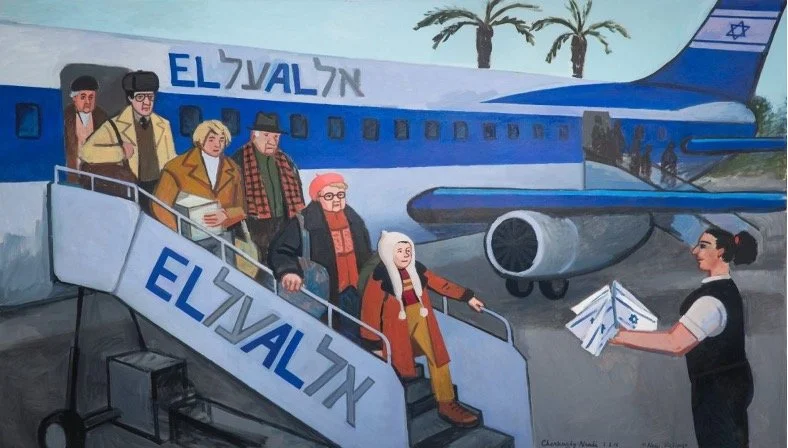
Jewish Christmas Trees, Kosher Pork: Soviet Jews and the New Jewish Diaspora (Stanford University)
In the late 1980s and early 1990s, during the years of the Soviet Union’s demise and eventual disintegration, nearly two million Jews emigrated from the Russian-speaking world. They landed in Israel and Germany, Canada and the United States, radically altering the demographic makeup of the global Jewish community. In the post-Soviet period, these Jews have evolved into a politically powerful, philanthropically aggressive, technologically innovative, and culturally distinctive transnational diaspora. At the same time, they are a unique, and oftentimes bewildering, phenomenon in the Jewish world, their sense of identity shaped by decades of secular Soviet influence.
This interdisciplinary course explores the historical roots of post-Soviet Russian Jewish culture and community. It draws on new, cutting-edge scholarship in Soviet Jewish history, as well as a wide and eclectic array of primary sources that speak to the uniqueness of Soviet Jewish culture and identity. Together, we will read Soviet war journalism and contemporary Russian Jewish fiction, watch Yiddish-language propaganda films and Soviet cartoons, listen to music inspired by the Holocaust, meet Soviet emigres in person, and taste food from the Soviet Jewish kitchen—even experimenting with recipes on our own.
In the first half of the course, we will trace Soviet state efforts to secularize and modernize Russia’s Jews in the wake of revolution, the transformation of Jewish tradition, the Holocaust on Soviet territory, and the revival of Jewish identity and struggle for emigration in the postwar period. In the second half, we will journey from the Soviet Union to the far reaches of the post-Soviet Jewish diaspora—indeed, right here in the Bay Area—exploring the anxieties of immigration and acceptance, the wages of acculturation and assimilation, and the interplay between cultural displacement and nostalgia. Above all, we will analyze how identities are molded and fashioned over time, through the crucibles of revolution, war, migration, and resettlement.